

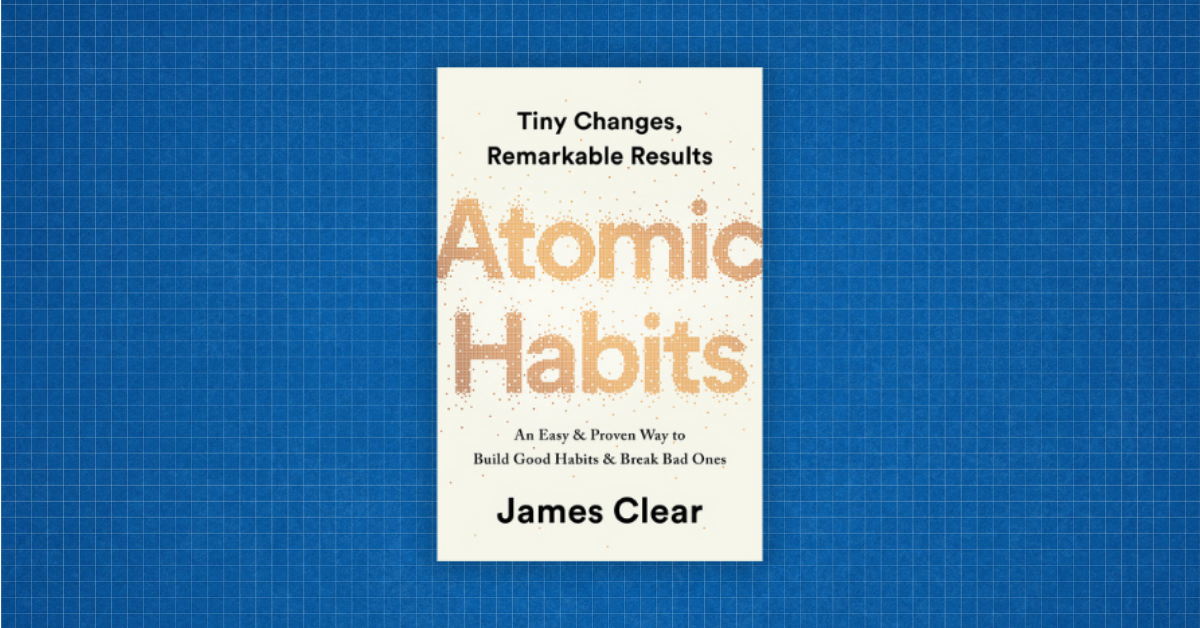

Atomic Habits is the clearest, most actionable book on habit-building I’ve come across. James Clear skips the motivational fluff and gives you an actual system. Five stars, and I don’t hand those out easily.
I put off reading this one for an embarrassingly long time. It had been recommended to me so many times, by so many people, that it started to feel like homework. You know how a book can get so hyped that you’re almost annoyed at it before you’ve read a single page? That was me with Atomic Habits.
I was wrong to wait. Clear doesn’t waste your time. The whole thing is built around one honest premise: you don’t rise to the level of your goals, you fall to the level of your systems. That framing alone reoriented how I think about a lot of things, including my training, my work habits, and the approximately seven side projects I’ve started and quietly abandoned.
Within a few days of listening I was already making small adjustments. Rearranging my workspace. Reframing a couple of goals. Nothing dramatic. That’s kind of the point.

The Lowdown on Atomic Habits
The book is built around the Four Laws of Behavior Change: make it obvious, make it attractive, make it easy, make it satisfying. Each law gets its own section with research, real examples, and concrete tactics. It’s not abstract. Clear is constantly showing you exactly how to apply the thing he just explained.
He pulls from psychology and neuroscience without making it feel like a textbook. The stories are good. The frameworks are tight. Compared to something like The Power of Habit, which leans heavier on the science side, this one is more blueprint than theory. Less “here’s why habits work” and more “here’s what to actually do.”
It gets repetitive in spots. If you’re already deep in the personal development rabbit hole, some of this will feel familiar. But even then, Clear packages it well enough that it lands fresh.
How Easy Is This to Get Through?
Very easy. Under six hours. Clear narrates it himself and the pacing is solid. Short chapters, clean structure, no fluff padding. I listened through most of it on runs and commutes and never lost the thread.
This is genuinely one of the better audiobook experiences I’ve had in this genre. Some self-help books are clearly written for print and feel awkward as a listen. This one works either way.
My 5 Biggest Takeaways From Atomic Habits
1. Small changes compound into big results.
1% better every day sounds like a bumper sticker until you do the math. Clear makes the compounding argument clearly and early, and it reframes what “progress” should even look like day to day.
“Habits are the compound interest of self-improvement. The effects of your habits multiply as you repeat them across time.”
2. Identity beats outcomes.
The shift from “I want to run a marathon” to “I’m a runner” sounds small. It isn’t. Clear argues that every habit is a vote for the kind of person you’re becoming, and that framing the goal as an identity change is what makes it stick. This one hit me as both a runner and someone with too many half-finished projects.
“Every action you take is a vote for the type of person you wish to become.”
3. Your environment is doing more work than your willpower.
Willpower is overrated. Clear’s point is that if you have to rely on willpower to maintain a habit, you’ve already designed your environment wrong. Set things up so the good choice is the easy choice. This is stupidly simple and I still needed someone to tell me.
“You do not rise to the level of your goals. You fall to the level of your systems.”
4. Habit stacking actually works.
Attaching a new habit to an existing one gives it a built-in cue. After I pour my coffee, I’ll read for ten minutes. After my run, I’ll stretch for five. Simple. I’ve been doing versions of this without a name for it. Having the framework made it more intentional.
“Habit stacking is simply linking a new habit to a current habit, using the current habit as a cue.”
5. The results lag behind the work. Keep going anyway.
Clear calls this the Plateau of Latent Potential. You put in the work, nothing seems to change, and then suddenly it does. Anyone who has trained for a race or tried to build a consistent lifting schedule knows this feeling. Good to have the science behind it.
“The most powerful outcomes of any compounding process are delayed. You get what you repeat.”
Final Thoughts
I was late to this one and I’m genuinely annoyed about it. Atomic Habits is the rare self-help book that earns its reputation. It’s practical, well-structured, and immediately usable. Clear isn’t trying to inspire you. He’s trying to give you a system. That’s a different thing and a better one.
The repetition is the only real knock. Some concepts get hammered a few times more than necessary. But that’s a minor complaint about a book that otherwise delivers on everything it promises.
Stop waiting to read it. Just go listen to it on your next run.


