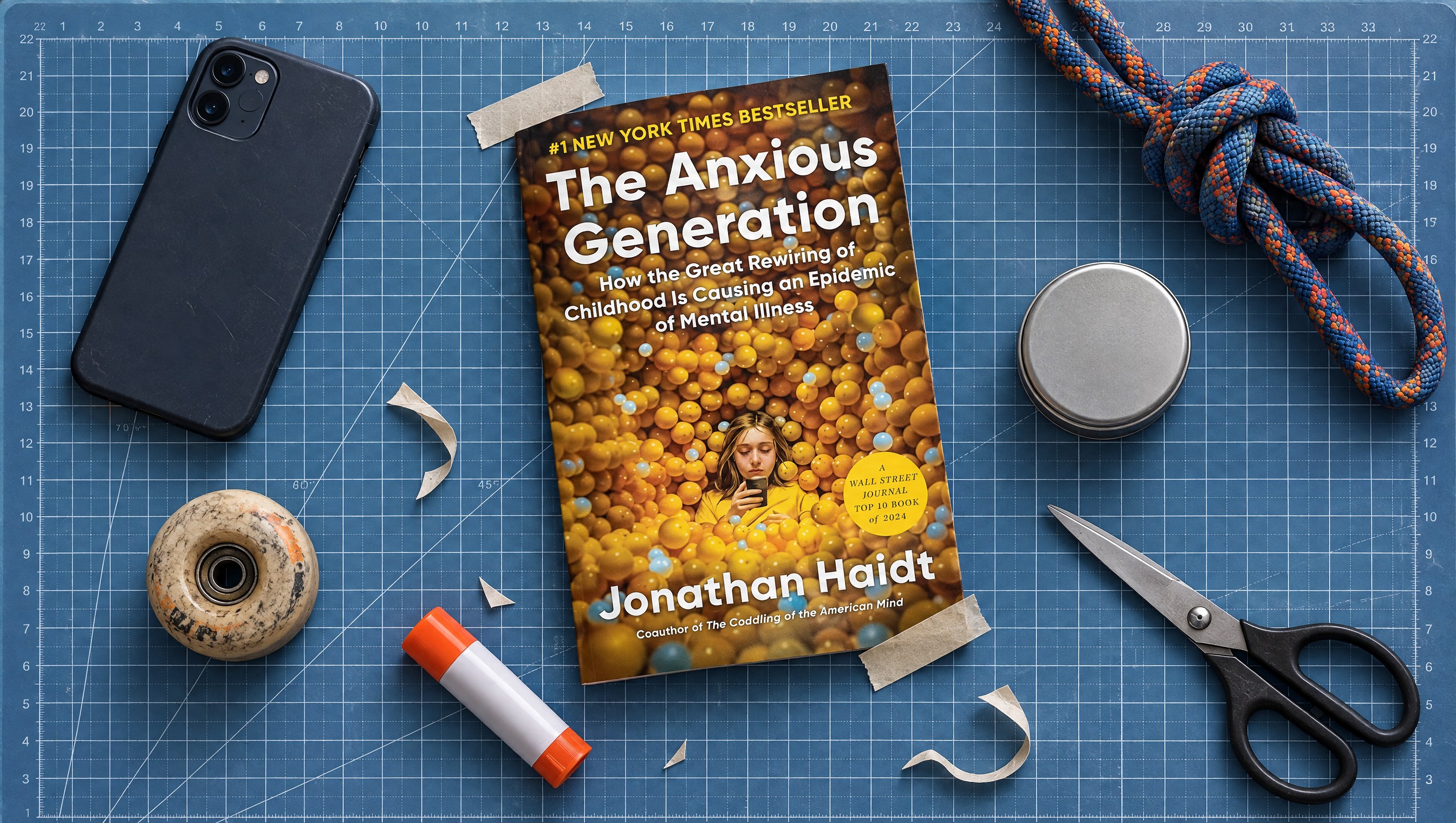

The Anxious Generation is Haidt’s most data-heavy argument yet: the mental health crisis in Gen Z is a direct result of the phone-based childhood that took hold after 2010. He lays out the evidence, explains why it’s worse than you think, and then gives you a four-part plan to actually do something about it. This one is required reading if you have kids.
I picked this up because I’m a dad with three daughters and a career in tech. That combination makes me exactly the target audience for a book about smartphones destroying kids’ brains. I’d already read The Coddling of the American Mind and came away from that one pretty shaken. So I knew going in that Haidt doesn’t mess around.
He doesn’t disappoint. The argument isn’t “phones bad, go outside.” It’s a structured, data-backed case for why the mental health crash in Gen Z lines up almost perfectly with the moment smartphones and social media went mainstream. Especially for girls. The timeline is hard to look away from.
He’s not preachy about it. He’s not shaming parents. He’s diagnosing a system failure, which is a different thing entirely. And honestly, that framing made it easier to sit with.

The Lowdown on The Anxious Generation
Haidt’s core argument is that childhood shifted from “play-based” to “phone-based” around 2010. Kids stopped roaming the neighborhood and started spending their social lives in algorithmic spaces built to be addictive. He calls this the “great rewiring” and spends a good chunk of the book showing what it’s doing to adolescent brain development.
The research he pulls from covers neuroscience, psychology, and sociology. It’s dense but he explains it clearly. The picture it paints is not great. Not panicky, just not great.
The back half of the book pivots to solutions: delay smartphone and social media access, bring back free play, reform schools, and build community-level norms. Practical stuff, not just hand-wringing.
How Easy Is This to Get Through?
Pretty easy, considering the subject matter. Haidt writes clearly and structures his chapters well. The audiobook pacing is solid for nonfiction. You’re not going to get lost.
There’s a good mix of data, real stories, and practical takeaways. It never gets so academic that you tune out. You can hand this to any concerned parent or teacher and they’ll finish it.
My 3 Biggest Takeaways From The Anxious Generation
1. Phone-based childhood is incompatible with healthy development
Once you see the data, it’s hard to argue with. Kids got smartphones, mental health crashed. The timeline holds across countries, cultures, and age groups. Haidt isn’t saying correlation. He’s saying causation, and he shows his work.
“We have overprotected our children in the real world while underprotecting them in the virtual one.”
2. Social media hits girls and boys differently
As a girl dad, this section hit different. Girls deal with constant social comparison and exclusion. Boys tend to retreat into passive, isolating screen time. Same technology, different damage. That nuance matters a lot if you’re trying to actually help your kid.
“Girls suffer more from visual social comparison, while boys are more vulnerable to the numbing effects of screen-based entertainment.”
3. No single parent can fix this alone
This is the part that’s both sobering and clarifying. If everyone else is handing their kid a smartphone at age 10, your personal discipline doesn’t do much. Haidt’s solution requires collective action, shared norms, community buy-in. It’s a harder ask. It’s also the only thing that actually works.
“No parent can solve this alone. The solution must be collective, with shared norms that delay exposure for all kids at once.”
Final Thoughts
The Anxious Generation is one of those books that changes how you see something you interact with every single day. Haidt isn’t catastrophizing. He’s just showing you the data and asking you to take it seriously.
If you have kids, read it. If you work with kids, read it. If you’re just a person who was a kid once and wonders why everything feels so broken right now, read it.
Then put your phone down and go outside.