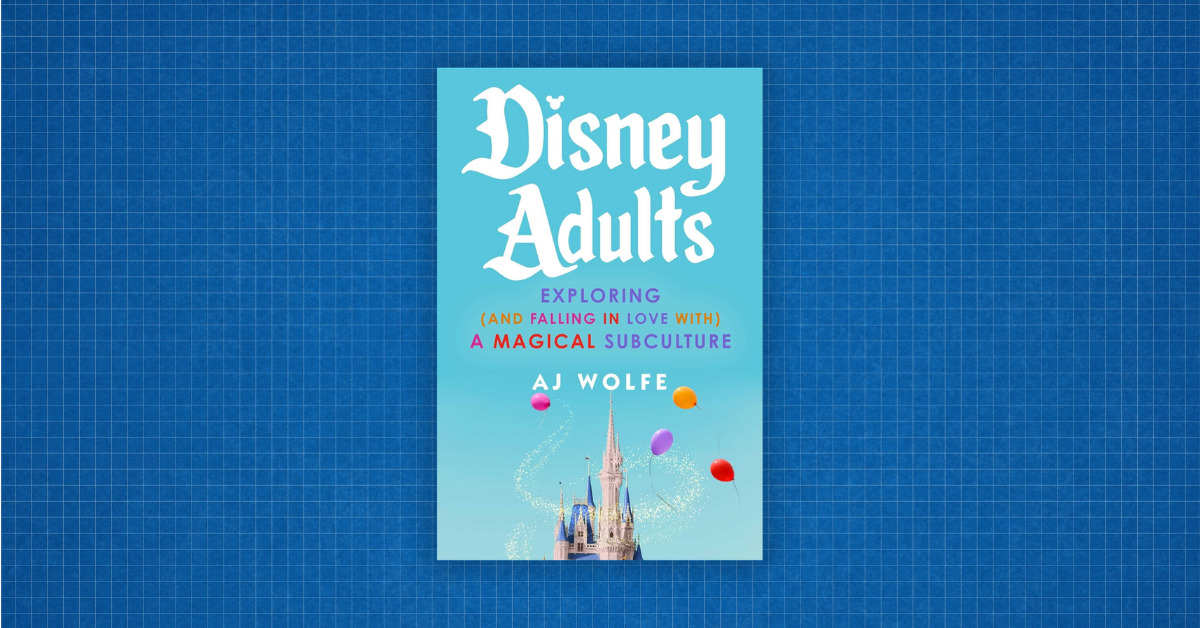
TLDR: Disney Adults is a fun, interview-driven look at the people who never outgrew the magic and a surprisingly honest exploration of why nostalgia hits so hard.
- Title: Disney Adults
- Author: AJ Wolfe
- Format Consumed: Audiobook
- Length: 8 hrs
- Genre: Pop Culture / Cultural Commentary
- Rating: ⭐⭐⭐
I picked this one up because, well, the title called me out by name. I’m a Disney adult. Unapologetically. I don’t have a Disney room in my house or an annual pass, but there’s something about walking into a Disney park that completely short-circuits my adult brain in the best way possible. When I saw this book existed, I had to know if I was alone in that.
The book tackles a question a lot of people have about Disney adults: why? Why do grown adults (people with mortgages and jobs and kids of their own) keep coming back? Why does a cartoon mouse have this kind of hold on us? Wolfe doesn’t mock the subject. She takes it seriously, which is what makes the book actually worth reading.
Wolfe’s approach is primarily interview-based. She talked to a lot of Disney adults (people at every point on the spectrum) and lets them explain themselves in their own words. It’s more journalism than essay, more documentary than manifesto. And honestly? That’s both the book’s biggest strength and its occasional weakness.
If you’re someone who has ever felt slightly embarrassed about how much you love Disney, or if you just want to understand the people who do, this one’s for you.
The Lowdown on Disney Adults
The book’s central argument is that Disney fandom isn’t childish. It’s deeply human. Wolfe explores nostalgia as a genuine psychological mechanism, a way people manage stress and reconnect with versions of themselves that felt safer or simpler. That framing is what gives the book its legs. It’s not just “Disney fans are quirky.” It’s “Disney fans are people using something that works for them.”
The structure is built almost entirely around interviews. Wolfe talks to Disney adults across the full spectrum: people who dedicate entire rooms of their house to Disney memorabilia, people who go to Disney World every single year without fail, and people like me who are more quiet about it. Just drawn in by the nostalgia without making it a lifestyle. That range is the book’s biggest asset. It shows you how wide the definition actually is.
The writing is accessible and light. There’s no heavy academic framework here, which keeps things moving but also means the analysis stays fairly surface level at times. It’s closer to a well-produced podcast in book form. Engaging, anecdote-heavy, occasionally repetitive.
How Easy Is This to Get Through?
Eight hours on audio, which is a perfectly reasonable length. I did most of it on runs and in the car, and it held up fine in both settings. The narration is solid and the interview segments give it a natural rhythm. It doesn’t feel like someone just reading text at you. Some sections drag more than others, and there were stretches in the middle where the book lost a bit of steam. Not enough to quit, but enough to notice.
This isn’t a dense listen. You don’t need to take notes. It’s a good companion for a long run or a road trip, especially if the topic already has a hook in you. If Disney adults are just not your thing, even a little bit, this one will feel slow in spots.
My 4 Biggest Takeaways From Disney Adults
1. Disney adults are not a monolith.
This was the thing I found most interesting. Before reading this, I kind of lumped all Disney adults into one category: the people who go every year, own all the merch, and have strong opinions about which park is superior. But the book makes clear there’s a whole spectrum. Some people build their identity around it. Others (like me) just feel something when they walk through the gates and don’t think too hard about why. Both are valid. That was genuinely clarifying.
If you don’t get it, you don’t get it. There’s an emotional something. If it doesn’t get you emotionally your first time or your second time, it never will.
2. Nostalgia is functional, not weak.
Wolfe makes the case that nostalgia isn’t just sentimentality. It’s a coping mechanism. People reach for it when the present is hard. That reframe is useful. It stops the conversation from being “why are adults so obsessed with childhood things” and turns it into something more honest: people are using Disney the same way they use anything that makes them feel okay. That’s not embarrassing. That’s just being a person.
Nostalgia is a way of coping with distress by temporarily escaping the pain of the present. We use it when we need it.
3. Escape is universal. Disney just executes it well.
One of the quieter points the book makes is that the desire to escape isn’t unique to Disney fans. Everyone wants out of their head sometimes. Disney has just built an extremely effective machine for delivering that. That’s not a criticism. It’s kind of impressive when you think about how deliberately and consistently they’ve done it for decades.
The emotional desire for escape from the real world is by no means exclusive to Disney fans. It’s a theme that’s been explored countless times.
4. Some fans deliberately keep a lid on it.
One interview stuck with me more than the others. A Disney adult explaining why they intentionally don’t go too deep, because they’re scared they’d burn out on it and ruin it for themselves. That’s a level of self-awareness I did not expect from this book. And honestly? I felt seen. That’s exactly how I think about it too. The magic is partly preserved by rationing.
I think part of the reason [Disney is] not my whole entire life is because I’m a little nervous I would get sick of it and I would ruin it for myself. I don’t want that. So I do try to limit it that way.
Final Thoughts
Disney Adults is a fun read that does something genuinely useful: it takes the subject seriously without making it heavy. Three stars feels right. It’s a good book, not a great one. The interviews are the highlight, the pacing drags in places, and the analysis could go deeper. But it’s worth your time if Disney is already somewhere in your personality.
If you’re a Disney adult looking for someone to finally explain why you’re like this, give it a listen. Preferably on the drive to the airport on your way to a park.