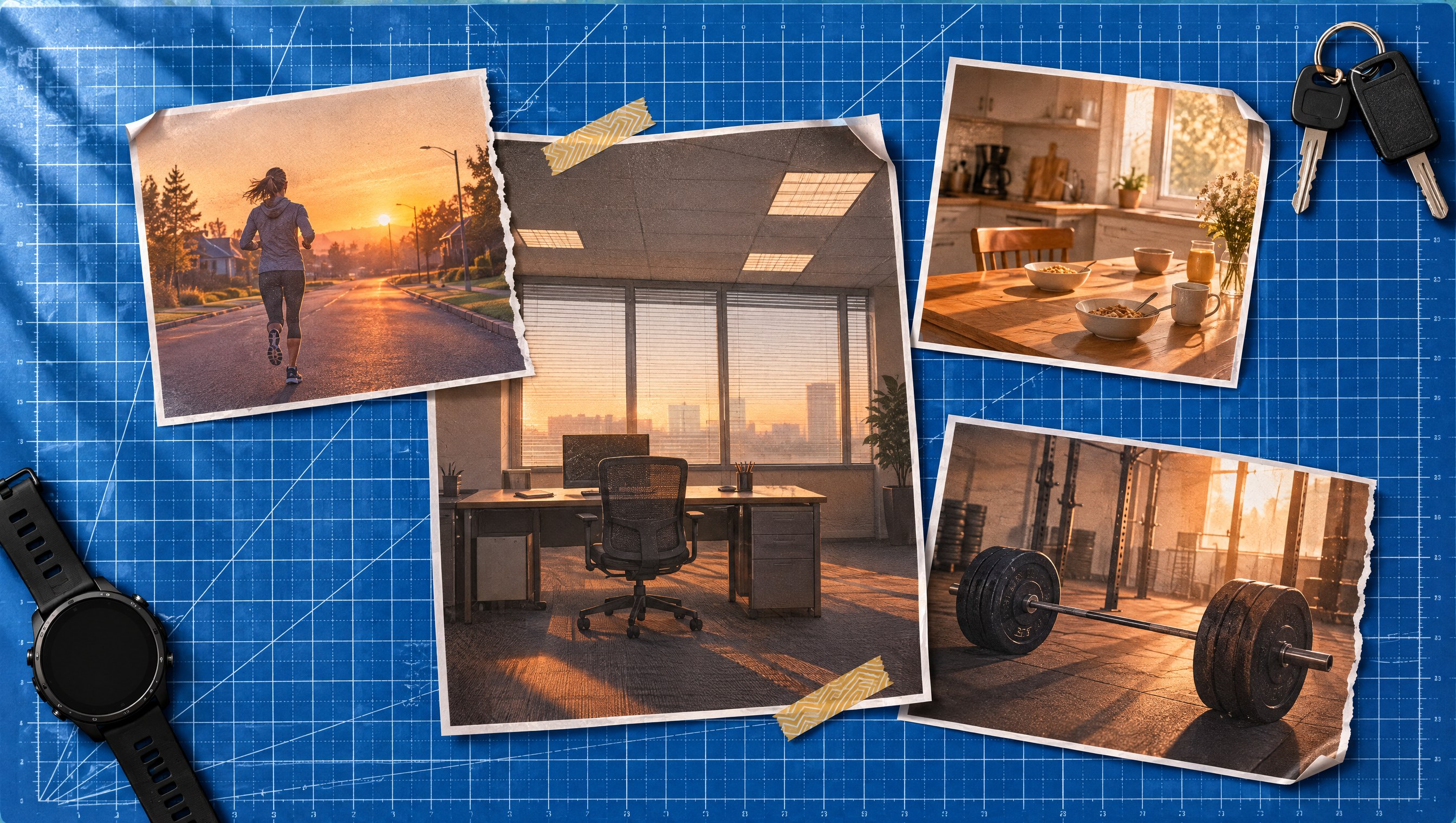
The return to office debate keeps arguing about where the work gets done. The part nobody talks about is everything around the work: the 5 AM run, the lunch lift, the time with your kids. I’m fully remote, and the research backs up what I’ve lived: mandates don’t make companies perform better, and flexible schedules keep people from quitting. Remote isn’t perfect (it’s lonely, and I haven’t fixed that), but the debate should be about your whole day, not your desk.
Every return to office argument I read is about a desk. Is the desk at home better or the desk downtown? Who’s more productive at which desk? Whose company culture dies without the desk?
Nobody talks about the other hours. That’s where my life actually happens.
What the Return to Office Fight Is Actually About
Right now the whole thing is a data fight. Executives say culture and productivity. A Resume Builder survey of 978 business leaders found that companies adding office days mostly cite culture (64%) and productivity (62%), and 30% expect to require five days a week in 2026. The same survey found 8% admit they’re doing it to push people to quit. Cool.
Workers fire back with research. A University of Pittsburgh Katz study of S&P 500 firms found return to office mandates lowered employee satisfaction and didn’t improve company performance. The researchers said the results fit employee fears that managers use mandates to grab power and blame workers for bad results. Nice work, Pitt.
Both sides are arguing about output between 9 and 5. Fine. That’s not what I’d lose.
What My Commute Used to Cost Me
I’ve done the office job. My commute ran 45 to 60 minutes each way, so up to two hours a day in the car. Over a five day week that’s somewhere between seven and a half and ten hours. Every single week.
And it didn’t just eat the drive. It took a bite out of everything around it:
- Training. Runs and lifts got skipped, squeezed, or shoved into bad hours.
- Time with my kids. My three daughters got whatever was left over.
- Energy. I’d get home with nothing in the tank for hobbies or side projects.
- Money. Gas and wear on the car add up, and nobody puts that line in the offer letter.
None of that shows up in a productivity study. All of it showed up in my life.

Life Happens Between 9 and 5
Here’s what a weekday looks like now that I’m fully remote. On run days I’m out the door at 5 AM, and I budget 45 minutes for it, shower included. At lunch I block 90 minutes to drive to the gym, lift, shower, and get back. That lunch floats anywhere between 11 and 2 depending on meetings. Push, pull, legs, upper, lower, Monday through Friday.
None of that survives a commute. The 5 AM run turns into a 4 AM run or no run. The lunch lift just doesn’t exist. If you’ve read my half marathon training plan for people who also lift, you know the whole thing depends on that gym routine staying exactly where it is.
That’s the point the debate keeps missing. Flexibility isn’t about the desk. It’s about the hours around the desk becoming usable: the run, the lift, being in the house when my daughters are. The work still gets done. It just stops eating the rest of the day.
The research quietly agrees. In Stanford economist Nick Bloom’s experiment with 1,612 Trip.com employees, moving people from full time in the office to a hybrid schedule cut resignations by 33% with no hit to performance or promotions. The biggest drop in quitting came from people with long commutes. I used to be one of those people.

The Honest Downside of Being Fully Remote
I’m not going to pretend remote is perfect. It’s lonely. I miss hallway conversations and actually knowing the people I work with. A thumbs up reaction on a message is not a coworker.
I haven’t solved it. I’m not going to hand you a five step fix I don’t use myself. It’s a real cost, and anyone telling you remote work is all upside is selling something.
But look at the trade. Loneliness is a problem I can work on inside a day that has room in it. Up to ten hours a week in a car is a problem that takes the room away.
What a Return to Office Mandate Conversation Should Actually Ask
If your company is weighing a return to office mandate, or you’re weighing a job that comes with one, “where is the work more productive?” is only half the question. The other half is what the policy does to the rest of your day.
So ask the stuff nobody puts in the memo. What does the commute replace? The run, the gym, dinner, bedtime? Who in your house covers for you? What do you stop doing because you’re too cooked when you get home? I’ve written about training for a marathon with three kids, and the schedule math only works when the day has slack in it.
After ten years in tech, my take is simple: the debate is aimed at the wrong hours.
Your Homework
Pull up tomorrow’s calendar. Block out every hour that isn’t work: the commute, the workout, the kid stuff, the dinner. Then look at what’s left and ask whether your job’s policy was built with any of those hours in mind.
If it wasn’t, bring them up. Out loud. In the meeting. The return to office debate won’t get better until somebody puts the other hours on the table.
Take what’s useful. Leave the rest.