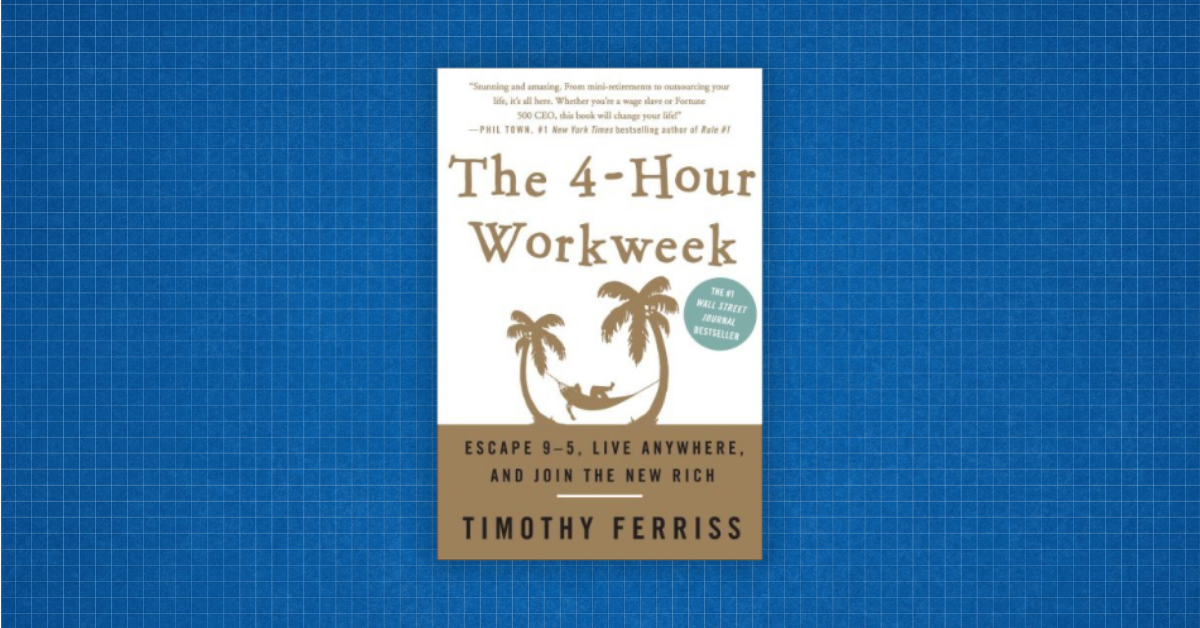
TLDR: The 4-Hour Workweek is Tim Ferriss‘s playbook for escaping the 9-to-5 and building a life on your own terms. Part productivity guide, part automation manual, part lifestyle manifesto. Not everything in it has aged well, but the core philosophy is hard to argue with.
- Title: The 4-Hour Workweek
- Author: Tim Ferriss
- Format Consumed: Audiobook and print
- Length: ~13 hrs (416 pages in print)
- Genre: Business / Productivity / Lifestyle Design
- Rating: ⭐⭐⭐⭐

I kept hearing this book cited by entrepreneurs, creators, and anyone building something outside a corporate structure. As someone who spends a lot of time thinking about how I use my time and what “freedom” actually looks like in practice, it felt like required reading.
Ferriss is bold, occasionally arrogant, and extremely tactical. That combination is either going to click for you or it’s going to make you want to close the book. It clicked for me. Not because every tactic is still usable (some of this is very 2007 internet), but because the underlying mindset is genuinely useful: optimize for output, not hours.
The specific tools matter less than the question Ferriss keeps forcing you to ask. Which is basically: why are you doing it this way, and is there a better one?
The Lowdown on The 4-Hour Workweek
The book is built around Ferriss’s DEAL framework: Definition, Elimination, Automation, and Liberation. Define what you actually want, cut everything that doesn’t serve it, automate what you can, and stop tying yourself to a desk and a time zone.
He backs it up with personal stories, case studies, and a lot of concrete tools. Email templates, outsourcing workflows, passive income setups. The tone is fast and confident, sometimes bordering on smug. But the material keeps moving.
This isn’t a philosophical book. It’s a tactical manual for reclaiming time, and it reads like one.
How Easy Is This to Get Through?
Very easy. Ferriss writes blunt and practical, with lots of sidebars and lists. You can skim for tactics or go front to back for the full mindset shift. Either approach works.
Fair warning: some sections feel like a time capsule from the 2000s internet boom. The VA outsourcing stuff especially. The concepts still hold up but you’ll need to update the specific tools yourself.
Whether you’re a corporate employee, a solo creator, or a small business owner, the reading experience is fast and it’s hard to walk away without at least a few things to act on.
My 3 Biggest Takeaways From The 4-Hour Workweek
1. Time is a currency. Spend it like money.
This is the mindset shift that stuck with me most. Instead of “how do I make more money,” Ferriss pushes you to ask “how do I get more time.” He treats time as the actual metric of wealth. Once that clicks, it reframes a lot of decisions.
“The opposite of happiness is boredom.”
2. Being busy is a form of laziness.
Ferriss has zero patience for hustle culture. He sees constant busyness as a failure to prioritize. Reading this made me take a hard look at how much of my day is noise dressed up as productivity. The answer was uncomfortable.
“Being busy is most often used as a guise for avoiding the few critically important but uncomfortable actions.”
3. You can build systems that work without you.
The automation sections are where the book gets genuinely exciting. Not every tactic is plug-and-play today, but the concept is solid: build things that earn, respond, and operate while you’re not watching. That’s where real flexibility starts.
“Work wherever and whenever you want, but get your work done.”
Final Thoughts
The 4-Hour Workweek isn’t perfect. The tactics have a shelf life and Ferriss’s personality is an acquired taste. But the core of it: question the defaults, optimize for freedom, stop building someone else’s life on your time. That part holds up.
If you’ve ever felt like you’re grinding toward a finish line that keeps moving, this book will at least make you stop and ask why. That alone is worth the 13 hours.
Read it. Then go block two hours off your calendar and actually do something with what you learned.