- Distance
- Half
- Time
- 2:20:05
- Pace
- 10:41 /mi
My first race of any distance. Cramped in the last miles because I skipped the water.
TLDR: My first half marathon was also my first race of any kind. A year of running, no bib, then 13.1 miles through Pittsburgh in 2:20:05. It went fine until it didn’t. I skipped water stops early, my calves seized in the last miles, and I shuffled it home. These are the first half marathon tips I’d hand myself at that start line: drink at every aid station, hydrate before and after like it’s part of the plan, bring warm clothes you can throw away, and stop worrying about the Birmingham Bridge.
I had never pinned a bib on anything before that morning. Not a 5K, not a fun run, nothing. My first race was a half marathon, which is either brave or dumb depending on who you ask, and I’ve since decided it was a little of both.
Two years later I ran the same race in 1:58:55. Nothing dramatic happened in between. No secret plan, no new shoes, no personality change. I kept running. That’s the honest version, and it’s why I think the first one is worth writing down: most of what separated a rough first half from a good second one was stuff I could have known going in.
The Goal Was Just to Finish
I didn’t have a time in mind. I wanted to run the whole thing without walking and not embarrass myself in front of a city I live in. That’s a fine goal for a first half marathon and I’d give it to anyone. It also meant I didn’t think very hard about anything past “can my legs do thirteen miles.” They could. The rest of me was less prepared.
Where I Was Starting From
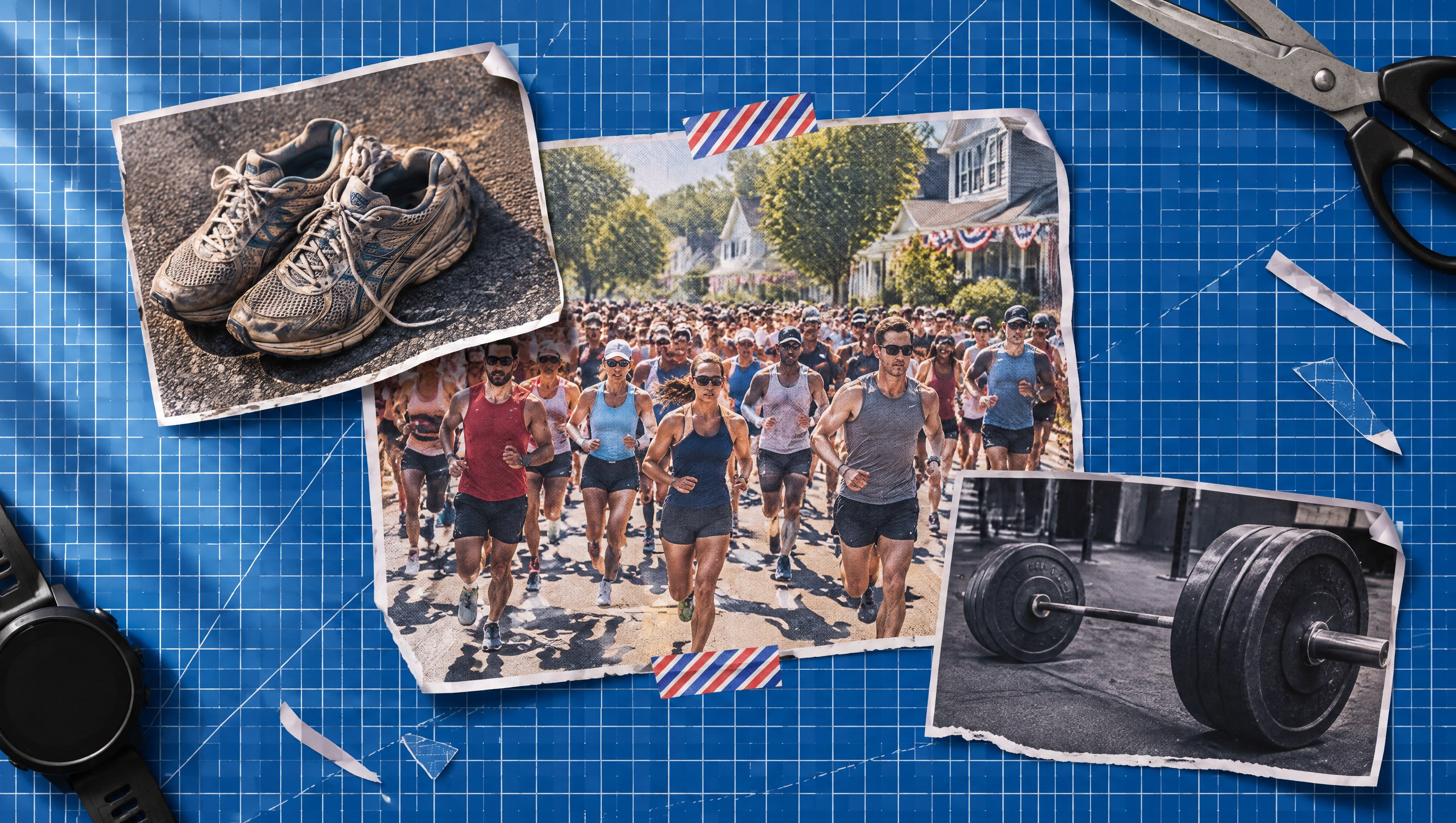
I’d been running for about a year. Not racing, just running: a few times a week around the neighborhood, slowly building until a long run was something I could say out loud without laughing. I lifted too, the way I still do, so my legs were strong and my lungs were a few steps behind them.
What I didn’t have was a single race under me. I’d never stood in a corral, never grabbed a cup from a stranger at a run, never dealt with the specific problem of being cold at the start and hot a few miles in. All of that was new on the same morning as the longest run of my life.
If you’re in the same spot, good. You’re exactly who this is for.

The Thing That Went Wrong
I didn’t drink enough. That’s the whole story. In training I ran with nothing and it was fine, because a training run is an hour and a race is over two with adrenaline on top. I passed the early aid stations because I felt good, and by the time I felt bad it was too late to fix. My calves started grabbing somewhere in the last few miles and I finished with the stiff, careful shuffle you’ve seen in every race photo ever taken near the end of a course.
I kept running. I want credit for that. But “kept running” at that point meant something closer to a fast walk with my knees locked, and every step was a negotiation with two calves that had stopped taking my calls.
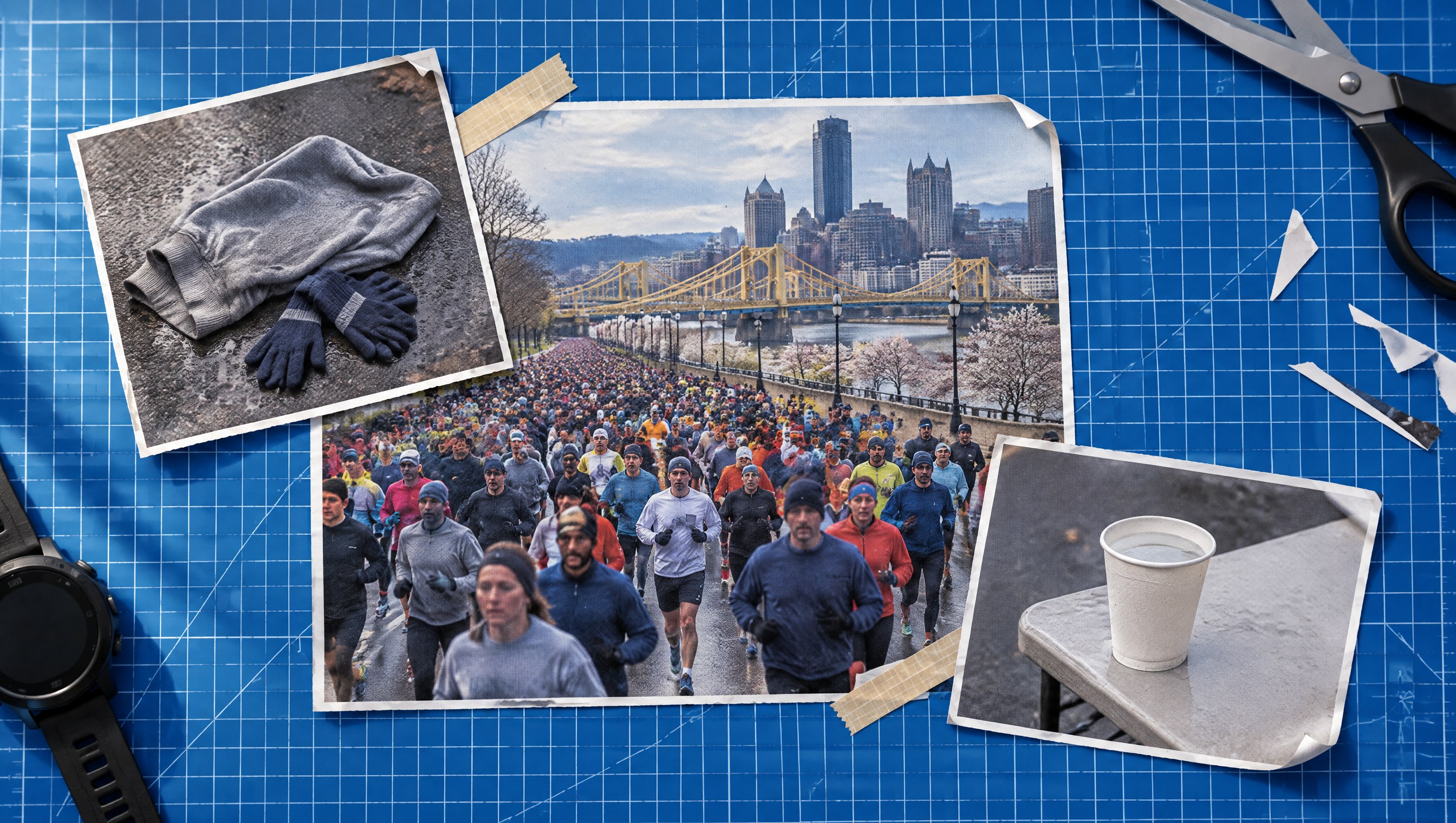
Two years later, same course, I took a cup at every table. I finished twenty-one minutes faster and my calves never said a word. I’d love to tell you the whole gap was training. Some of it was. A lot of it was water.
Tips for Running a Half Marathon I Wish Someone Had Given Me
Three things. Not eighteen. These are the ones that would have changed my morning.
Bring warm clothes you can throw away
Pittsburgh in early May is cold when you’re standing still in shorts and warm once you’re moving. You will stand in a corral for longer than you expect. Wear an old sweatshirt or a cheap pair of gloves over your race kit, and toss them at the side of the road once you’ve warmed up. A lot of races collect the discarded layers for donation, so nobody’s littering. Shivering before you run thirteen miles is a bad way to start, and it’s the easiest problem on this list to solve.

The Birmingham Bridge is not as bad as everyone says
Every Pittsburgh runner will warn you about it. It comes late, it’s a real hill, and by then you’re tired. It’s also shorter than the stories make it. I spent weeks dreading it and then I was over it before I’d properly started to complain. The bridges are the fun part of this course. Don’t let the internet turn one of them into a boss fight. If you want the mile by mile version, I wrote up the Pittsburgh course from someone who runs it every year, including the part that actually hurts.
Your first race is a logistics test, not a fitness test
Parking, the bag drop, where the bathrooms are, how early you actually need to be there, what you’re eating and when. None of that is in a training plan and all of it can wreck your morning. Read the race guide the week before. Lay everything out the night before. Get there earlier than you think you need to, because the corral is not the place to discover you don’t know where the corral is.
How 2:20 Became 1:58
I want to be careful here, because this is where posts like this usually sell you something. There was no breakthrough. I didn’t change my shoes, my diet, or my personality. I ran the marathon the next year, kept lifting, and kept running through the winters. Two years of not stopping turned out to be worth twenty-one minutes, and drinking the water was the rest.
If you want the plan version of that, I’ve written up the six month half marathon build I use now, and a six week version for people who are already running. Both are structure around the same idea: keep showing up, hold back on the easy days, and take the cup.
The Week Before
Nobody told me the week before matters as much as the run itself, so here’s what I’d do with it now. Cut the running down, not off. A couple of short easy runs keep your legs from feeling like strangers on race morning, and the long run you’re tempted to squeeze in does nothing but make you tired for the thing you actually trained for.
Start drinking water like it’s a job three days out, not the night before. Your body doesn’t top up in one evening. Eat things you’ve eaten before. Race week is not the time to find out how your stomach feels about a new breakfast, and the expo will try to sell you a gel you have never tasted. Buy it if you want. Don’t eat it Sunday.
Then lay everything out the night before: bib pinned to the shirt, shoes by the door, the throwaway sweatshirt on top, and whatever you’re eating at five in the morning already on the counter. Race morning should be a checklist you already finished, not a scavenger hunt.
How to Know You’re Ready
You’re ready if you can run ten miles slowly and you’re willing to be uncomfortable for a couple of hours. That’s it. You don’t need a race under you first, I’m proof of that. You don’t need a time goal. You don’t need to have figured out gels. You need the miles, the water, and a plan for the morning.
What you should not do is what I did, which is treat the race like a long run with a crowd. It’s a long run with a crowd, plus two hours of standing around, plus adrenaline, plus a cup of water every mile that you have to actually pick up. The running part you’ve trained. The rest of it is this post.
Try This First
On your next long run, set a bottle out and drink from it every mile, even when you don’t want to. Learn what running on a stomach full of water feels like before race day, and notice that it’s fine. Then go find your race guide and read the part about parking.
Your first half marathon is going to be a story either way. Drink the water, dress for the start, and take the bridge as it comes. That’s how you make it a good one.