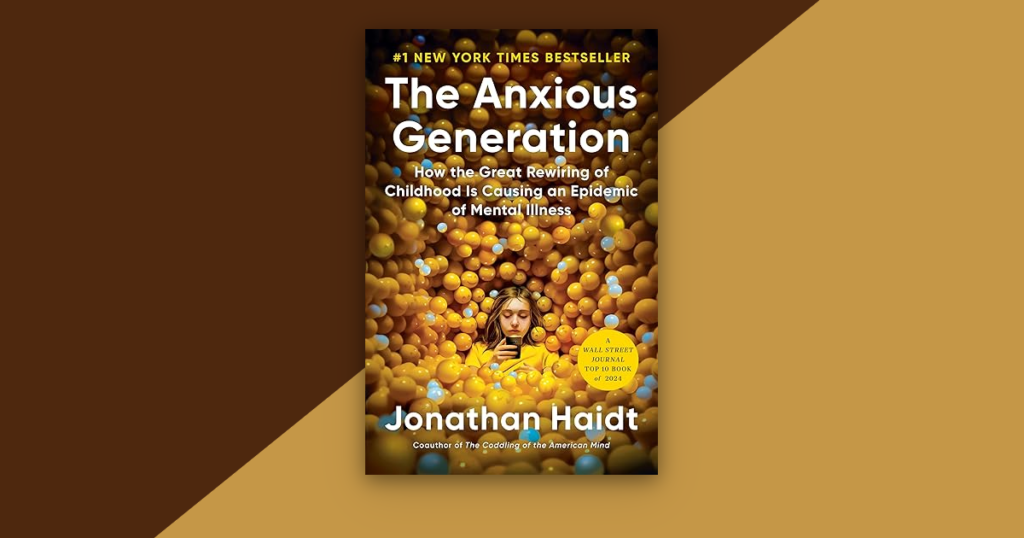
TLDR: The Anxious Generation is Jonathan Haidt’s most urgent and data-backed work yet, arguing that the mental health crisis in Gen Z is a direct result of the “phone-based childhood” that emerged after 2010. Using global data, cultural trends, and psychological research, Haidt lays out a four-part plan to fix what’s broken. This is not just a social critique — it’s a manual for parents, educators, and policymakers who want to raise mentally healthier kids in a digital age.
- Title: The Anxious Generation
- Author: Jonathan Haidt
- Format Consumed: Audiobook
- Length: ~10 hrs (352 pages in print)
- Genre: Psychology / Parenting / Cultural Commentary
- Rating: ⭐️⭐️⭐️
I chose to read this book because I’m a parent and a technologist, and I’ve been watching the intersection of social media, screen time, and youth development with increasing concern. Haidt’s previous work, especially The Coddling of the American Mind, was eye-opening, so I knew this one would be worth my time.
What stood out immediately was how structured and evidence-based the argument is. Haidt doesn’t just say, “Phones are bad for kids.” He shows, with data, how the rise in anxiety, depression, and self-harm maps directly onto the timeline of smartphone adoption and social media saturation — especially among girls.
He’s not alarmist, but he is blunt. And as a father, I appreciated that. He’s not shaming parents or kids — he’s diagnosing a system failure. One we all contributed to and one we can help fix.
The Lowdown On The Anxious Generation
Haidt argues that the childhood experience underwent a massive transformation starting around 2010, shifting from “play-based” to “phone-based.” Kids went from roaming the neighborhood and engaging in face-to-face interactions to spending most of their social lives online — often in toxic, curated, image-based spaces.
He introduces the concept of the “great rewiring,” showing how adolescent brain development is being hijacked by algorithmic platforms designed for addiction. He draws on research from neuroscience, psychology, and sociology to make the case that this shift is the root cause of rising youth anxiety.
Importantly, he offers solutions. His four-part plan includes delaying smartphone and social media access, bringing back free play, reforming schools, and empowering parents to create community-level norms.
How Easy Is The Anxious Generation To Read?
Despite the academic foundation, the book is highly readable. Haidt uses straightforward language and provides clear explanations of complex ideas. The chapters are well-organized, and the audiobook is paced well — especially for nonfiction.
There’s a balance between data, storytelling, and practical advice. While the subject matter is serious, the tone never becomes overly dense or pessimistic. Even if you’re not a researcher or educator, you’ll understand every point being made.
This is a book you can recommend to any concerned adult — and they’ll finish it.
My 3 Biggest Takeaways From The Anxious Generation
1. Phone-based childhood is incompatible with healthy development
This idea was the core of the book — and once you see the data, it’s hard to argue. The timeline is clear: kids got smartphones, and their mental health crashed. It’s not just correlation — it’s causation supported across countries, cultures, and age groups.
“We have overprotected our children in the real world while underprotecting them in the virtual one.”
2. Social media impacts girls and boys differently
I found this distinction especially useful as a parent. Girls face the pressure of constant comparison and social exclusion, while boys tend to withdraw into passive, isolating entertainment. It’s not one-size-fits-all — and that nuance matters if we want to build healthier digital environments.
“Girls suffer more from visual social comparison, while boys are more vulnerable to the numbing effects of screen-based entertainment.”
3. Community-wide action is the only scalable solution
Haidt makes it clear: no single parent can shield their kid if everyone else is handing over smartphones at age 10. That’s what makes his four-part plan so actionable — it calls for collective standards, not just personal discipline. This takeaway hit me as both sobering and hopeful.
“No parent can solve this alone — the solution must be collective, with shared norms that delay exposure for all kids at once.”
Final Thoughts
The Anxious Generation is essential reading for anyone raising, teaching, or mentoring young people in today’s hyper-digital world. Haidt doesn’t just describe the problem — he builds a framework for fixing it, rooted in data and common sense.
This isn’t just a book. It’s a call to action. If you care about the future mental health of your kids or your community, this is the book you need to read next.