- Distance
- 5K
- Time
- 28:35
- Pace
- 9:12 /mi
First 5K, first race with my wife, hottest run I had ever done.
TLDR: I ran my first 5K on marathon fitness with zero 5K-specific training, in July heat I had never run in before, and it hurt in a way twenty-mile long runs never did. A 5K is a different sport. This is the 8 week 5K training plan I would hand a friend who lifts: three runs a week with a job each, keep your gym days, learn what hard feels like before race day teaches you. No time goal required. I run these for fun and I still think you should train for one.
A 5K should be easy for someone who has finished a marathon. That is what I told myself in the corral.
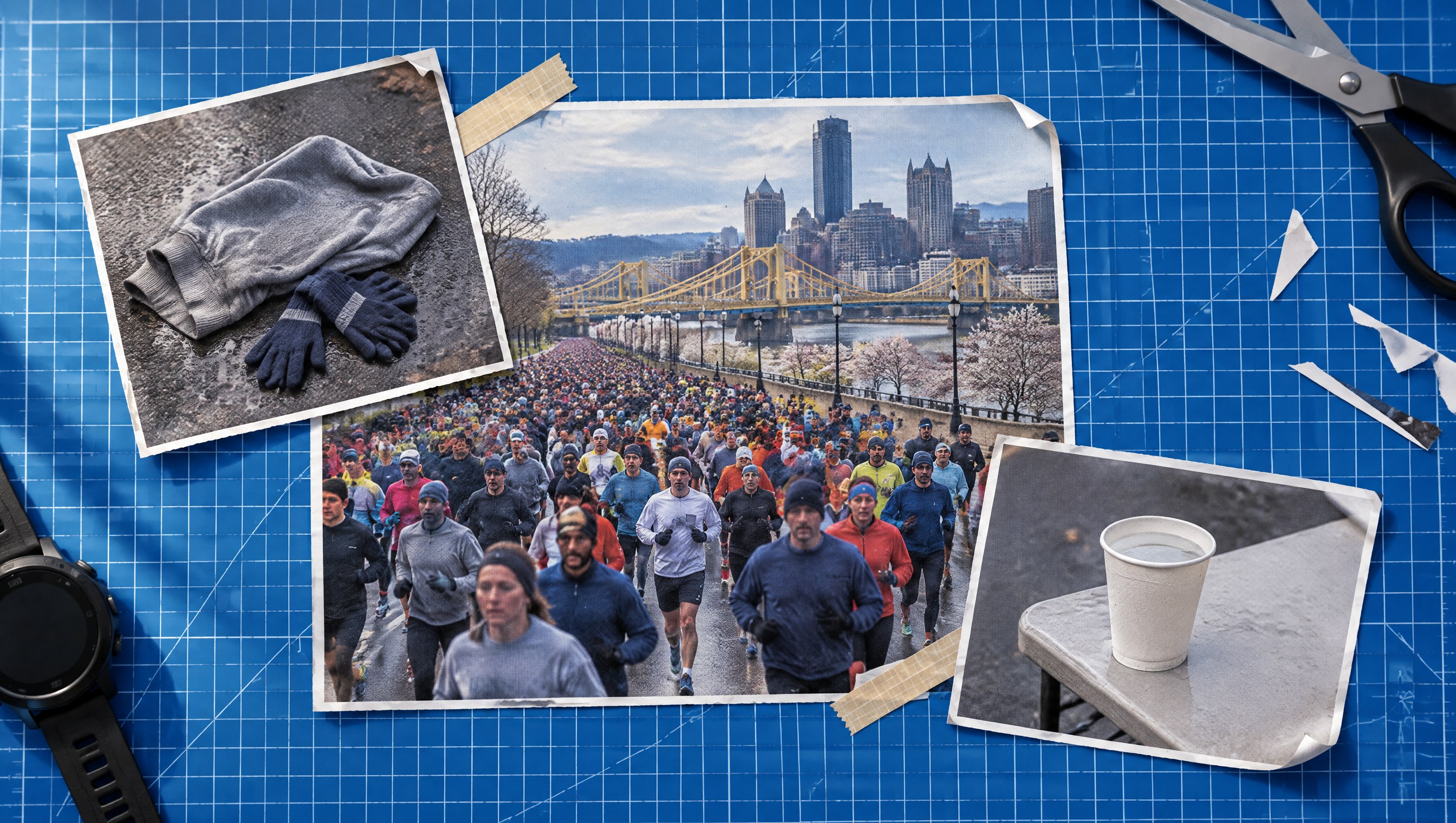
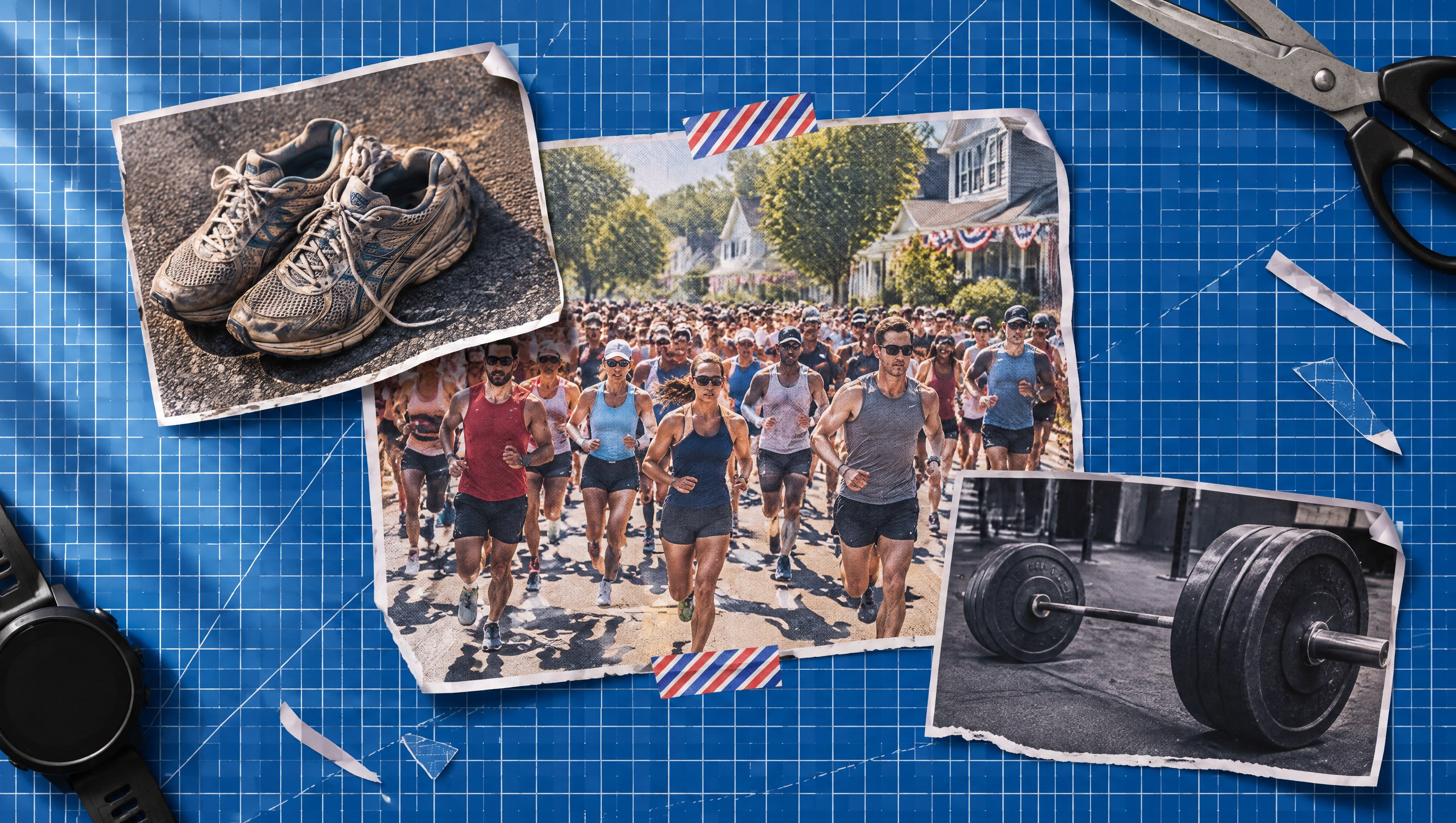
The Firecracker 5K is the Fourth of July race in my corner of Pittsburgh. It’s a neighborhood thing, the kind of race where you know half the people at the start. It was my first 5K, which sounds backwards for someone with a marathon and two halves on the books. It was also the first race my wife and I ran together. The kids are too young for the distance, so this one was ours.
I finished in 28:35 at 9:11 a mile with an average heart rate of 181. That is not a warm-up. That is a max effort, and it was over before my body had agreed to it.
The Goal Was Fun. The Lesson Was Not.
I had no time goal. I still don’t. I run 5Ks because they’re a good morning with a bib on, and this one came with fireworks and my wife next to me. Nothing went wrong on the day. I paced it evenly, I didn’t blow up, I didn’t walk.
What surprised me was how hard “fine” felt. I have run twenty miles at a conversational pace and felt better at the end than I felt at mile two of this thing. The heat did some of that. The rest was that I had spent months training an engine that idles for hours and about zero minutes training the part that redlines for three miles.
So the goal of this post is the one I should have set for that race: show up ready for the effort, not just the distance.
Where I Was Starting From
Marathon fitness, no speed work, five lifting days a week on the push/pull/legs/upper/lower split I’ve been running for a while. Plenty of easy miles in the legs. That’s a great base and a terrible 5K build, because every run in my week was designed to stay under the line. A 5K starts over the line and stays there.
I had also never raced in real heat. July in Pittsburgh is thick, and the race starts after the sun is already doing its thing. I know how to run in the heat. Racing in it is a different animal, because you can’t just slow down and call it an easy day.
Why a 5K Hurts Differently Than a Marathon
Marathon training teaches you to hold back. Long runs, easy days, the whole thing is built around staying below the effort that puts you in a hole. A 5K is the opposite. You go over the line at the start and you hold it there for twenty-something minutes. There is no settling in. Mile one feels fine, mile two is where you find out whether you’re fit for this, and mile three is a negotiation.
Being marathon-fit gets you to the finish. It does not get you there comfortably. Running hard for three miles is a specific skill, and the good news is it responds fast to a little specific work. Eight weeks is plenty. It’s also the minimum I’d put my name on.
The Approach: Three Runs, Keep the Gym
Same shape as every plan I write, because it’s the only shape that survives a real life. Three runs a week, each with a job. Lifting stays. If you’re worried about the gym eating the running or the other way around, I’ve written about how I combine running and lifting without losing muscle, and the short version is that three runs a week is not the thing that kills your gains.
Why three and not five? Because the fourth and fifth runs in an 8-week 5K plan are junk miles for a lifter. You already have a training load. The three runs below cover speed, sustained effort, and base. Anything past that is stealing recovery from your squat day.
Here’s what each run is for:
- Intervals. Short, hard efforts with recovery between them. This is the 5K-specific work. It teaches your legs to turn over and your lungs to tolerate it.
- Tempo. A sustained effort at roughly the pace you hope to race. Uncomfortable but controlled. A few words, not a sentence.
- Easy run. Longer and slow. Conversational. This is where the aerobic base comes from, and it is the run everybody runs too fast.
Put legs on the same day as intervals or tempo, not the day before, so your hard days are hard and your easy days are actually easy. Upper body goes wherever it fits. If you have to drop something in a busy week, drop a gym session before a run. The gym will still be there in nine weeks.

The 8 Week 5K Training Plan
Paces are by feel on purpose. “Hard” is an effort you could hold for about a mile. “Tempo” is an effort you could hold for twenty minutes. “Easy” means you could talk the whole way. If you want numbers, run the tempo sessions and you’ll have your race pace by week four.
Weeks 1 and 2: Get Your Legs Under You
- Intervals: 6 × 1 minute hard, 2 minutes walk or jog between
- Tempo: 10 minutes easy, 8 minutes tempo, 5 minutes easy
- Easy run: 2 miles, walk breaks allowed
The interval day will feel silly short. That’s fine. You’re teaching your body that there’s a gear above “jog” and that it comes back after a walk.
Weeks 3 and 4: Start Building
- Intervals: 8 × 1 minute hard, 90 seconds jog
- Tempo: 10 easy, 12 tempo, 5 easy
- Easy run: 2.5 to 3 miles, no walk breaks by week 4
Weeks 5 and 6: The Real Work
- Intervals: 5 × 3 minutes hard, 2 minutes jog
- Tempo: 10 easy, 15 tempo, 5 easy
- Easy run: 3.5 to 4 miles. Yes, longer than the race. That is the point.
These two weeks decide the race. The 3-minute repeats will feel long. The 15-minute tempo will feel like the race, because it basically is. Good. Everything after this is sharpening.
Week 7: Sharpen
- Intervals: 4 × 800m at goal race pace, 3 minutes jog
- Tempo: 10 easy, 10 tempo, 5 easy
- Easy run: 3 miles
Week 8: Race Week
- Early week: 20 minutes easy with 4 × 20-second strides
- Two days out: 15 minutes easy, or nothing
- Race day: jog 10 minutes before the start. Go out at the pace you practiced, not the pace of the person next to you.

What I Got Wrong
I treated the race like a long run with a shorter route. I did no intervals, no tempo, nothing at race effort in the weeks before. So the first time my legs ran 9:11 pace for three miles was with a bib on, in heat I had never raced in. The pacing held, which I’ll take, but “held” is not the same as “ran well.”
The heat was the other thing. I knew it would be hot. I did not know what hot felt like at race effort, because every hot run I’d done that summer was an easy run where I could back off. In a 5K there is nowhere to back off to. If your race is in July, practice in July.
And I’d enforce eight weeks. Shorter plans exist. They work for people who already run fast. If you’re a lifter building the running habit and the running fitness at the same time, eight weeks gives you room for a bad week, a sick kid, and a work trip without blowing the whole thing up.
The Result
28:35. 9:11 a mile. 181 average heart rate, which for me is the number I see at the end of a hard hill, not the average of a run. My wife and I both finished, both upright, both sweating through everything we had on. I would do it again tomorrow.
Nothing about that day changed how I train. I kept lifting, I kept running the way I was running. What it changed is what I’d tell someone who asked me how to get ready for one. Which is this post.
How to Start If You’ve Never Run
If you lift but a twenty-minute jog sounds like a lot, stretch weeks 1 and 2 into four weeks and use walk breaks on every run, not just the easy one. Keep the structure. Intervals can be 30 seconds hard and 2 minutes walking. Tempo can be 5 minutes at “a little uncomfortable.” The point is that each run has a job from day one, so you’re not just jogging three times a week and hoping.
Drop to four lifting days while you build. Not forever. Eight weeks.
Try This First
Before you commit to anything, go run one mile as hard as you can hold for a mile. Not a sprint. A mile. Then look at your watch. That number is your interval effort for the next eight weeks, and if it surprised you, that’s the whole reason this plan exists.
Pick a race that means something. Ours was a holiday, a neighborhood, and my wife next to me for the first time. Then give it eight weeks so the fun part is actually fun. If you’ve done the marathon thing and think a 5K is beneath you, go run one at full effort and report back. I’ll wait.