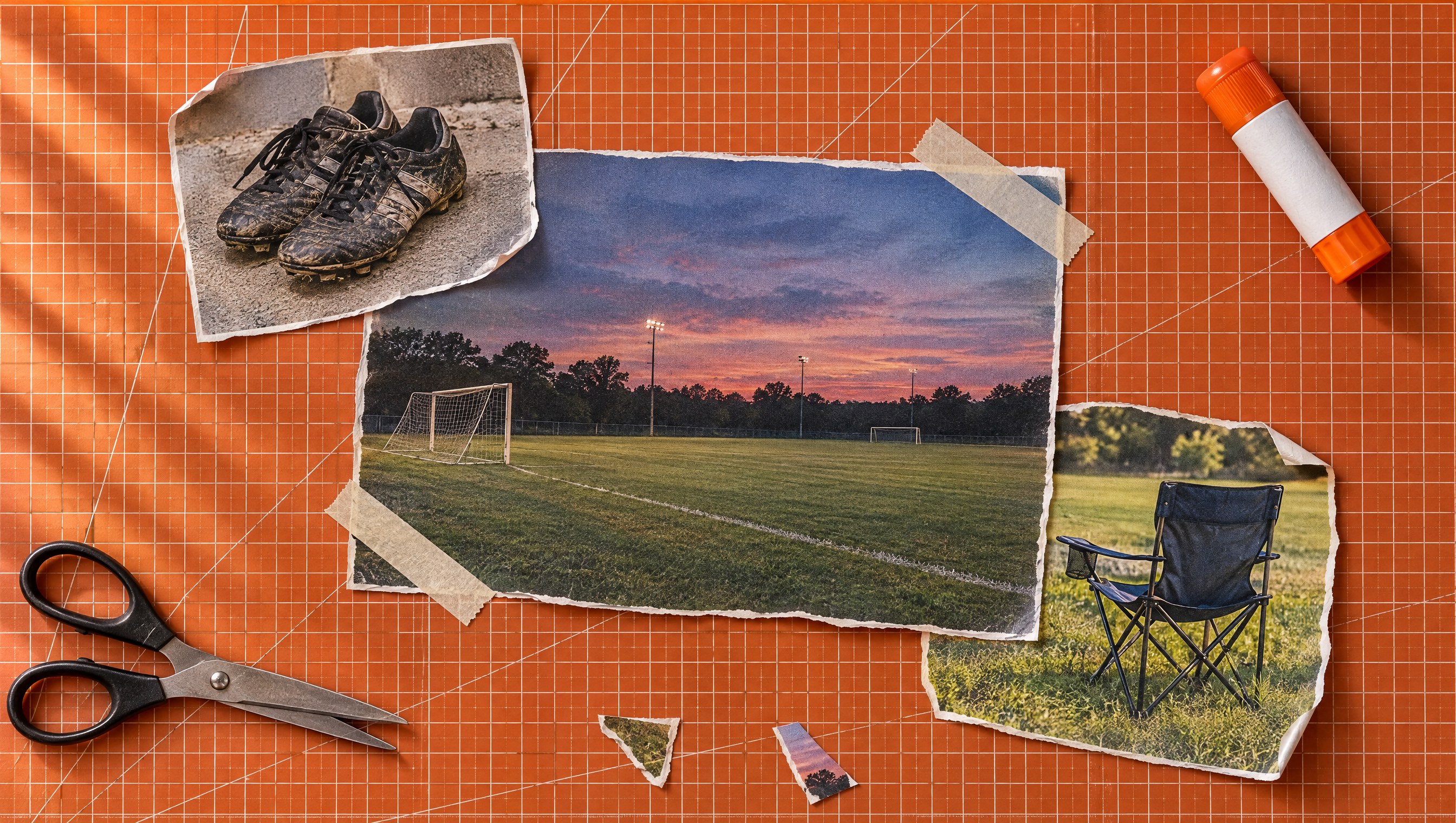
TLDR: Youth sports didn’t used to be this. Registration fees that rival a car payment, weekends that belong to the tournament schedule before your kids are old enough to drive, and a pressure culture that treats nine-year-olds like they’re preparing for the NFL Draft. I’m not anti-sports. I have three daughters, and I can see where this is heading. But what we’ve built around kids competing is something different from what it’s supposed to be, and it’s worth saying out loud.
Signing a kid up for soccer used to be simple. Registration was $85. You got a jersey, showed up on Saturday mornings, kicked the ball in the wrong direction a few times, and had an absolute blast. That was the deal. That was youth sports.
Now it’s travel teams, tournaments two hours away, and gear recommendations from coaches that assume everyone is shopping at the same zip code as a Division I recruiting budget. The jersey is now $120 before the optional bag and the warm-up pants and the cleats that are “better for this surface.”
I don’t know exactly when youth sports became this. But it did. And we’re all just going along with it.

What This Actually Costs
Let me give you a real number. A single season of travel soccer for one kid, done at a modest level, runs somewhere between $1,500 and $2,500 when you account for registration, gear, hotel nights for away tournaments, gas, and the food you’re buying because you’re stranded at a sports complex in a town you’ve never heard of. That’s one sport. One kid. One season. For comparison, the national average across all youth sports is closer to $1,016 per child per year, and it has risen 46% in five years.
I have three kids, and I’ve already done the math once on what kids actually cost us as a family. Youth sports is its own line item entirely, and it’s not a small one.
I’m not saying I can’t afford it. I’m saying the cost has become a baseline expectation that nobody really questions anymore. And when that cost is attached to a sport your eight-year-old picked because she thought it looked fun, something is wrong with the framing.
The gear escalation is its own category. Every sport has an equipment ecosystem that expands to fill whatever you’re willing to give it. Cleats aren’t just cleats. Bags aren’t just bags. There are parents on the sideline with children who are nine years old discussing the relative merits of different brands of lacrosse shaft like they’re reviewing Formula 1 components.
The Weekend Is Gone
From the outside, the picture looks simple. Saturday morning game, maybe an hour and a half, back home by noon. Kids are tired and happy, you grab lunch, the rest of the weekend is yours.
That is not how this works.
Tournament weekends start Friday night with packing and prep and getting kids to bed at a reasonable hour. Saturday is arrival time, warmups, multiple games, breaks that aren’t really breaks because you’re keeping track of fields and schedules and who needs what when. Sunday is the same until you drive home, get back Sunday evening, and realize Monday is already happening.
Do that for several consecutive weekends and everything else gets lived around it. I’m a runner, and I train seriously, so I can see exactly where that goes: weeks in a row with no seam in the schedule for a long run. Same for whatever your partner is trying to hold onto. The sport absorbs the family calendar completely.
That’s not balance. That’s the tournament schedule winning.

The Pressure Part Nobody Talks About
Here’s the thing that actually bothers me more than the money and the time. The pressure.
Kids who are eleven and twelve are being evaluated, tracked, and sorted into tiers in ways that carry real weight in their heads. They know which team is the “A team.” They know who got cut. They hear coaches talk about “commitment” and “seriousness” in ways that attach identity to athletic performance at an age when their brains are nowhere near ready to handle that.
I’ve watched kids cry at the end of a game at an age where the point is supposed to be that you’re just out there moving your body and having fun. Not because they lost. Because they felt like they let someone down. That’s not a sport problem. That’s a culture-around-the-sport problem.
The intensity comes from adults. It always does. The coaches who treat recreational games like film sessions. The parents who debrief performance in the car before their kids have even taken their cleats off. The whole infrastructure that treats “is your child ready for the next level” as a relevant question for a seven-year-old.
Most kids who play youth sports will not play in high school at a competitive level. Most kids who play in high school will not play in college. The whole pipeline leads, for the vast majority of participants, to “they stopped playing at some point and hopefully still like the sport.” If that’s where we’re going anyway, the intensity we’re applying along the way needs some justification that isn’t just “this is how it’s done now.”
What I’m Actually Saying
I’m not telling you to pull your kids out of sports. I’m not calling for the end of travel teams or organized competition. Sports gave me some of the best experiences of my life. Hockey and rugby are still part of who I am. I want my daughters to have that.
What I’m saying is that the machine that’s grown up around youth sports doesn’t serve kids anymore. It serves the tournament industry, the gear companies, the club system, and, honestly, the identity needs of a lot of parents who’ve transferred their own competitive energy into their children’s athletic careers. It’s the same instinct behind a lot of the small daily habits I try to be intentional about as a dad: the goal isn’t to optimize the kid, it’s to notice when the system is optimizing you.
Your kid playing soccer should not require a spreadsheet, a $200 bag, and a booked-out weekend schedule before they’re old enough to stay home alone. It should be a kid kicking a ball with her friends and coming home dirty and happy.
We’re the adults. We set the conditions. If the conditions we’ve set are this, that’s on us to look at honestly.
Take what’s useful. Leave the rest.