

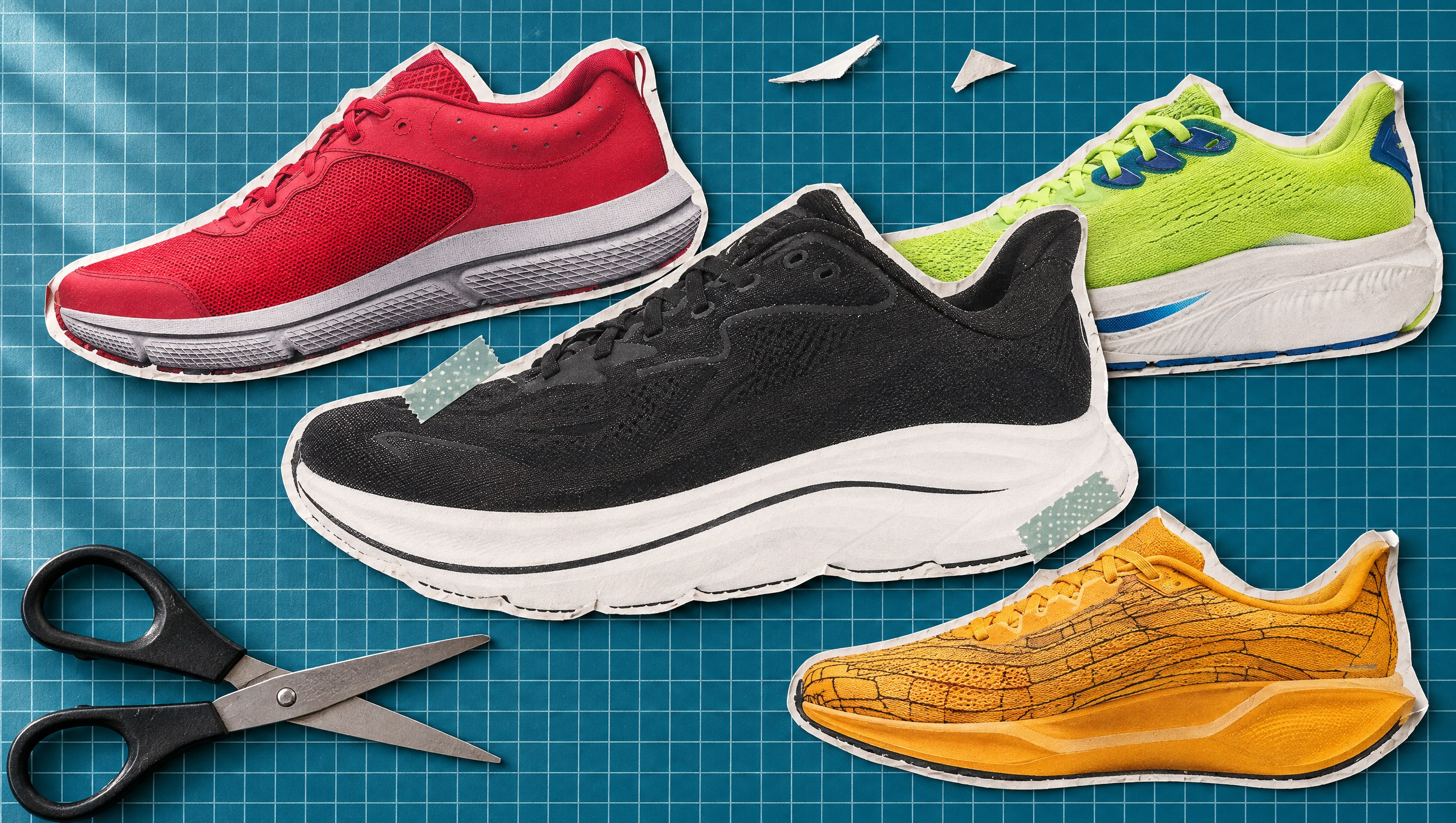
TLDR: It took me two years and seven pairs to find a running shoe I actually liked. Two Under Armours were too narrow and left my feet hurting on long runs. A Nike Pegasus lost its tread fast. Two Brooks were passable but had more cushion than I wanted. The Hoka Clifton is the one that worked, and I have bought nothing else since. I train and race marathons in them. One honest note up front: I wore earlier versions of most of these shoes, and the links go to what is currently sold.
For about two years I was the guy who kept buying running shoes hoping the next pair would be the one.
Not in a gear-obsessive way. I was not chasing marginal gains or reading stack height charts. I just kept ending up with shoes that hurt, wore out wrong, or felt like running in a mattress, and I could not work out what I was doing wrong.
The part I had backwards
I wear a standard width. Not wide. I want to say that at the top because it is the thing I got wrong for the longest.
When a shoe squeezed my foot and my arches ached at mile ten, I assumed the problem was me. My form, my mileage, my ramp-up. It did not occur to me that some brands just cut their shoes narrower than others, and that a normal foot can be too wide for them.
If you have normal feet and shoes still hurt, you are probably making the same mistake I made. You are looking for a wide size when what you actually need is a different brand.
Under Armour: two pairs, one problem
I gave Under Armour two real shots. First a cheap pair, the Charged Assert, on the theory that a running shoe is a running shoe. Then, when that did not work, an expensive pair, the HOVR Phantom, on the theory that I had been cheap and that was the problem.
Same result both times. Too tight across the width, and my feet hurt on long runs. Short runs were survivable. Anything past an hour and I was counting down.

That second pair taught me something worth more than the shoes cost. An expensive shoe from a brand that does not fit your foot is still a shoe that does not fit your foot. Price was never the variable. Shape was.
Worth flagging if you go looking: Under Armour has since dropped the HOVR name, and what they sell as the Phantom now is a different shoe from the one I ran in. I cannot tell you whether they fixed the fit, because I have not tried it.
Nike Pegasus: the tread went first
The Pegasus is probably the most popular running shoe on earth, which is exactly why I bought it. If everybody runs in it, it must work.
The fit was better than the Under Armours. The problem was durability. The tread wore off far faster than it should have, and I was looking at a bald outsole while the rest of the shoe still looked new. They also were not particularly comfortable, which I might have forgiven if they had lasted.
A shoe that dies early is worse than an uncomfortable one, because you feel it twice. Once on the run and once when you replace it ahead of schedule.
Brooks: passable, and too much shoe
Two pairs of Brooks, the Ghost and the Glycerin. These are the first shoes on this list I would not warn anyone off.
They were passable. Nothing hurt. The fit was fine. If I had never tried anything else I would probably still be running in Brooks and telling you they were great.
But they had too much cushion for me. There is a point where cushioning stops protecting you and starts putting distance between your foot and the ground, and both Brooks pairs sat on the wrong side of it. The Glycerin especially. I never felt connected to the road.
This is the part of shoe advice that gets handed out badly. More cushion is sold as an upgrade. It is not an upgrade, it is a preference, and plenty of people prefer less of it than the marketing assumes.
Hoka Clifton: the one I kept buying
Then I tried the Hoka Clifton and stopped looking.
The width was right in a standard size, which after the Under Armour years was the whole ballgame. The cushion was there without being the point. Nothing hurt at mile ten, or mile twenty.
I have been in Cliftons ever since. I train in them and I race marathons in them, which is not something I would have predicted, because the conventional move is a lighter shoe on race day. I tried enough shoes to stop caring what the conventional move is.
My replacement cycle is simple and not very scientific. I run a pair for a season, and unless something starts bothering me, I retire them after a big race. I do not track mileage on them and I am not going to pretend I do.
I am currently on the Clifton 10. The Clifton 11 is out and I have not run in it, so I cannot tell you whether it is better. The 10 is still sold and usually cheaper, which is the one I would buy again today.
Hoka Clifton vs Bondi: I tried the switch and went back
When a pair of Cliftons wore out I tried the Bondi. Same brand, more cushion, generally treated as the more premium shoe in the lineup.

I want to be careful here, because it would be easy to turn this into a takedown and it does not deserve one. There was nothing wrong with the Bondi. It is a well built shoe and a lot of people run happily in it.
I just was not as comfortable in it as I am in the Clifton. That is the entire review. I went back to Cliftons and have not looked at anything else since.
If you are choosing between the two and you already like Cliftons, the Bondi is not an automatic upgrade just because it has more foam in it. That was the same mistake I made with Brooks, and the same mistake I made buying the expensive Under Armours.
What I would tell you to do instead
Two years is a long time to spend on this and you can shortcut most of it.
Stop assuming the pain is your fault. If a shoe hurts on long runs and feels fine on short ones, that is usually the shoe, not your training.
Treat width as a brand question, not a size question. I never needed a wide shoe. I needed to stop buying from a brand that cuts narrow.
Do not let price do your thinking. The most expensive shoe on this list is not the one I kept.
Cushion is a preference. Figure out whether you like feeling the ground before you buy the plushest thing on the wall.
When something works, buy it again. The Bondi detour cost me a season of running in a shoe I liked less. I have not made that mistake twice.
If you want the rest of what I got wrong before any of this made sense, start with what I wish I knew before my first marathon, or what to know before your first half marathon.
Seven pairs to find one shoe. If your feet hurt and you have been blaming yourself, go try something with a different shape before you change anything about how you run.


