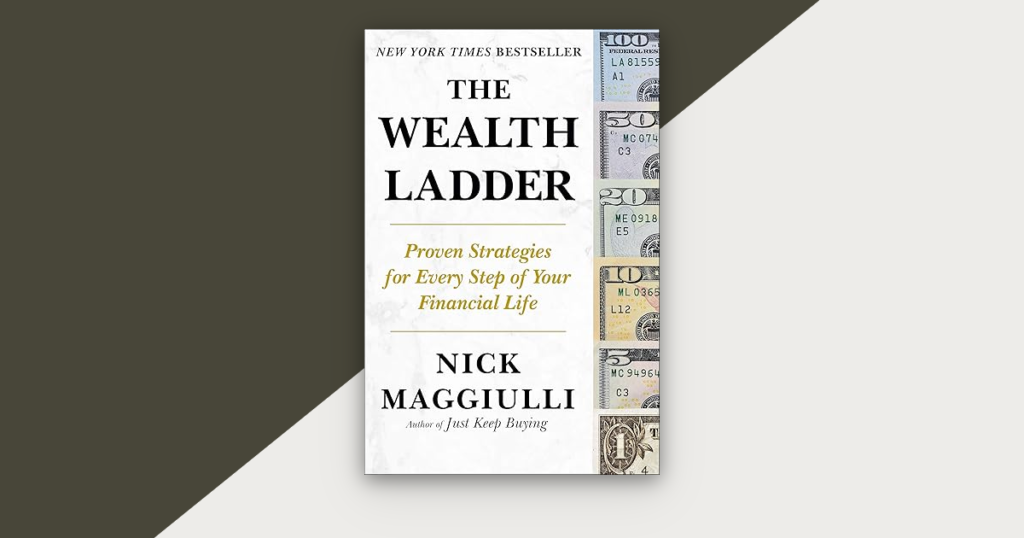
TLDR: The Wealth Ladder by Nick Maggiulli is a modern, tiered framework for building wealth, emphasizing strategy over hustle. It offers a practical look at how to move from surviving to thriving financially. While the higher-level chapters feel aspirational and somewhat detached for those not yet close to that wealth level, the book still delivers actionable advice on investing, skill-building, and leveraging the internet to create assets.
- Book Title: The Wealth Ladder
- Author: Nick Maggiulli
- Format Consumed: Audiobook
- Approximate Length: 6 hours
- Genre: Personal Finance / Wealth Building
- Rating: ⭐️⭐️⭐️

Why I Picked Up This Book
I first heard about The Wealth Ladder on an episode of the Morning Brew podcast. The title stood out, and I was curious how Maggiulli would frame the concept of wealth as a progressive ladder rather than a fixed target. This was also my first time consuming any of his content.
Most of the book delivered solid insights. The earlier chapters covered ideas that felt grounded—how to think about financial independence, time freedom, and the importance of relationships. These resonated because they connect wealth to life design, not just net worth.
As the book progressed, however, it shifted into territory that felt less applicable. The upper rungs of the ladder—those involving advanced investment strategies or large capital deployment—felt out of reach and not easily repeatable. Still, Maggiulli does a good job tying modern tactics like content creation, real estate, and tech skills into the wealth conversation, which helped ground the book in today’s reality.
The Lowdown On The Wealth Ladder
At its core, The Wealth Ladder presents the idea that financial growth is not a one-size-fits-all path. Instead, it’s a ladder—each rung representing a different stage of financial capability, from getting out of debt to building generational wealth.
Maggiulli organizes the book around these stages and offers different strategies depending on where you are. He emphasizes that tactics should evolve as your wealth grows. The book blends financial theory with personal development, offering readers a long-term mindset around money.
His tone is approachable, his data points are practical, and his style avoids the sensationalism that plagues much of the personal finance genre. Structurally, it’s a clean, well-paced read or listen, even if the content becomes aspirational at times.
How Easy Is The Wealth Ladder To Read?
The book is highly readable. Maggiulli writes in a clear, direct style that’s free from jargon. His examples are relatable early on, and his arguments are easy to follow, even when the subject matter becomes more complex.
The pacing is steady, and chapters are digestible in a single sitting. For listeners, the audiobook version is smooth and easy to absorb, with a good flow of ideas from chapter to chapter.
This is a good entry point for readers newer to personal finance, and still relevant for those looking to reevaluate their current financial strategy. However, readers who are earlier in their wealth journey may find the later sections harder to translate into immediate action.
My 3 Biggest Takeaways From The Wealth Ladder
1. Leverage Today’s Tools to Build Wealth
Maggiulli encourages readers to use modern channels like content creation, app development, or coding to build scalable income streams.
“In a world where distribution is nearly free, creating something once can pay off for years.”
2. Time Freedom Is a Real Asset
He reinforces that time—not just money—is a core part of true wealth, and that gaining control of your time is a key financial milestone.
“True wealth means not having to do anything you don’t want to do.”
3. Match Strategy to Your Wealth Level
The book stresses that advice isn’t universal—your approach should align with your current position on the ladder.
“Trying to run before you can walk financially is a recipe for burnout and poor decisions.”
Final Thoughts
The Wealth Ladder is a worthwhile read for anyone rethinking their approach to money. It avoids generic advice and instead offers a structured framework you can adapt based on your current situation. While parts of the book veer into aspirational territory, there’s enough grounded, actionable content to make it valuable.
If you’re early- to mid-stage in your financial journey and looking for a more strategic lens on how to build wealth, this book will give you a clear map—though not every part of it will feel accessible just yet. I’d recommend it for those comfortable filtering advice by relevance and ready to take ownership of their financial path.